
10 Best Sushi Making Kits for Beginners: Top 10 Sets for 2026
Discover the perfect sushi making kits for beginners, complete with expert reviews, essential tools, and tips for creating restaurant-quality rolls at home.
Disclaimer: As an Amazon Associate I earn from qualifying purchases from our site. Thank you for your support!

A few years back, I bought a cheap sushi making kit from a discount shop thinking I’d crack the sushi code. My first California roll looked more like a rice explosion than anything you’d find at a restaurant. The bamboo mat fell apart after two uses, and I ended up ordering takeaway in defeat. However, everything changed when I invested in a proper kit.
Whether you fancy spicy tuna rolls or simple cucumber makis, choosing the right sushi making kit makes all the difference. Let me show you exactly what works.
What’s the Easiest Sushi Making Kit for Beginners?

Right, let’s cut straight to it. The Delamu 20-in-1 Sushi Making Kit consistently ranks as the most beginner-friendly option available, and honestly, it’s earned that reputation through thousands of reviews.
This sushi making kit struck me as brilliant because it doesn’t overwhelm you with random gadgets you’ll never touch. You get two bamboo rolling mats (always handy to have a spare when one’s drying), a surprisingly sharp sushi knife, five different sushi molds, a rice paddle, spreader, chopsticks, and those cute little sauce dishes. Everything’s BPA-free, which matters when you’re handling food your kids will eat.
But here’s the real winner, the detailed guidebook actually helps. I’ve tested a lot of sushi making kits, and most include either no instructions or laughably bad translations. Delamu’s guide walks you through each step with clear photos. My sister borrowed my sushi making kit last month, had never touched raw fish before, and within an hour she’d made presentable nigiri that her kids actually ate. That’s the test, isn’t it?
The price is pretty affordable considering you’re getting everything needed to start your sushi journey. I’ve recommended this kit to at least a dozen friends, and not one has complained. Mind you, the knife could be slightly longer for cutting through thick rolls, but that’s genuinely my only gripe.
The sushi molds deserve special mention, too. They’re these ergonomic shapers that help you form perfect rolls without mastering the traditional mat-rolling technique. Brilliant for building confidence before you tackle more advanced methods.
Do I Need a Rice Cooker to Make Sushi?

Short answer? Nope. But let me explain both sides first because this question comes up constantly.
I made sushi for two years using just a regular pot before I bought a rice cooker. The traditional stovetop method works perfectly fine if you’re patient and follow the steps. You wash your rice thoroughly (this bit’s crucial), cook it with the right water ratio, and season it whilst it’s still warm. Thousands of sushi chefs have done it this way for centuries, and you can too.
However, I’ll admit something, my sushi rice improved noticeably after I started using a rice cooker. The consistency became more reliable, especially when I’m making larger batches for family gatherings. No more slightly mushy bits or the occasional burnt bottom layer that makes the kitchen smell dodgy.
If you’re serious about regular sushi-making and don’t mind spending extra, the CraftZee All-Inclusive Premium Sushi Making Kit includes a rice cooker along with standard tools. It’s pricier, but you’re essentially getting two kitchen appliances in one purchase. I’ve seen this kit work wonders for my friend Dave, who makes sushi twice weekly and swears by having dedicated equipment.
For most beginners, though, start without the rice cooker. Learn the process (see further below), figure out if sushi-making becomes a regular thing for you, then upgrade later if needed. A good quality pot with a tight-fitting lid does the job brilliantly. I still use my stovetop method when I’m only making enough for two people because it’s faster than dragging out the rice cooker.
The key to perfect sushi rice isn’t the equipment, it’s the technique. Washing away excess starch, using proper rice-to-water ratios (generally 1:1.2 for sushi rice), and seasoning at the right temperature matter far more than fancy gadgets.
What Should I Look for When Buying a Sushi Making Kit?
This question matters more than people realise. I’ve bought enough sushi making kits to spot the warning signs a mile away!
Essential Components (The Non-Negotiables):
First up, you absolutely need quality bamboo rolling mats. Not those flimsy things that snap after three uses like the ones I initially bought. Look for mats with sturdy bamboo slats stitched together with cotton thread. They should feel substantial in your hands, not like they’ll disintegrate if someone looks at them sideways.
A proper sushi knife makes everything easier, and I can’t stress this enough. Those plastic “knives” in cheap kits couldn’t slice through melted butter on a hot day. You want something sharp enough to cut cleanly through nori and rice without squashing your beautiful roll into oblivion. Even a decent kitchen knife works better than a rubbish sushi knife, though proper Japanese-style knives with their angled blades give cleaner cuts.
Rice paddles and spreaders sound boring, but they’re crucial for technique. The paddle scoops and serves without crushing delicate rice grains. The spreader (that flat wooden tool) helps you distribute rice evenly across the nori without using your hands, which get sticky and mess everything up. Been there, done that, bought the T-shirt, and learnt my lesson.
Material Quality Matters:
Bamboo remains the gold standard for sushi equipment. It’s naturally antimicrobial, doesn’t absorb odours like plastic does, and just feels right when you’re making sushi. Some kits include plastic bazookas or molds, which are fine as extras, but your main tools should be bamboo for longevity.
Check for BPA-free certification on any plastic components. You’re putting food on these things, so chemical safety isn’t negotiable. Most reputable brands advertise this prominently, and if they don’t mention it, that’s a red flag worth heeding.
The Instruction Trap:
Here’s something that caught me out initially, detailed guides matter tremendously. I bought a 32-piece kit once that included zero instructions. Just tools in a box with no context. I spent an hour watching YouTube videos trying to figure out what half the pieces even did! Look for kits that include either a physical booklet, an e-book, or access to online video tutorials that actually show you what to do.
Piece Count Doesn’t Equal Quality:
This one’s important, and manufacturers rely on people not knowing this. A 35-piece kit sounds impressive until you realise it includes five chopstick holders, four sauce dishes you’ll never use, and eight tiny molds for shapes nobody wants. I’ve found that 10-15 quality pieces work better than 30 mediocre ones. You’ll actually use a smaller, well-curated kit instead of feeling overwhelmed.
The best kits for beginners balance traditional tools (bamboo mats, good knife) with modern helpers (maybe a bazooka or basic molds) without drowning you in unnecessary gadgets. Think quality over quantity, always. Your kitchen cupboards will thank you.
Top 10 Best Sushi Making Kits for Beginners (2026)
After testing more kits than my kitchen cupboard can hold and spending way too much money on different sushi making kits, here are my top recommendations. Each serves different needs, so I’ve noted who they’re best suited for.
1. Delamu 20-in-1 Sushi Making Kit (Best Overall)
Best for: Anyone starting their sushi journey who wants options without spending a fortune.
What’s Included: Sushi bazooka, chef’s knife, two bamboo mats, rice mold, temaki sushi mats, rice spreader, rice paddle, five pairs of chopsticks, chopstick holders, sauce dishes, comprehensive guidebook.
This kit’s been my top recommendation for two years running. It perfectly balances quality and value and the sushi bazooka genuinely makes rolling easier for beginners, especially the bamboo mats let you learn traditional techniques once you’re ready for them.
Pros:
- Comprehensive guidebook with actual useful instructions
- Sharp knife (for a kit knife, anyway)
- BPA-free materials throughout every component
- Great value for the price point
- Bazooka simplifies the learning curve significantly
Cons:
- Knife could be slightly longer for thick rolls
- Bazooka takes up considerable storage space
2. FUNGYAND 32-in-1 Complete Set (Best for Families)
Best for: Families with children, party hosts, or anyone wanting maximum versatility.
What’s Included: Bazooka roller, nigiri press, musubi press, bamboo mats, knife, peeler, animal rice molds, chopsticks, avocado slicer, ceramic dishes, and more family-friendly tools.
My kids absolutely love this kit. Those animal-shaped rice molds (pandas, bears, stars) turn sushi-making into a craft project that keeps children engaged. Last month, we hosted a sushi party for my daughter’s friends, and these molds kept eight 9-year-olds entertained for hours whilst actually producing edible results.
Pros:
- Tons of creative options for various skill levels
- Animal molds make it fun for children
- Comprehensive set for different sushi styles
- Good quality across all 32 pieces
- Great for parties and family gatherings
Cons:
- Can overwhelm absolute beginners initially
- Requires significant storage space
- Some pieces won’t get used regularly
- Higher price point

3. Alas Complete 20-Piece Sushi Making Set
Best for: Nice for beginners or anyone wanting a bit more than the essentials
What’s Included: Sushi knife, two bamboo sushi mats, rice bazooka, chopsticks, chopstick holder, dipping plate, avocado slicer, nigiri maker, cucumber slicer, rice paddles, sushi brush.
This kit surprised me with its quality considering it typically sells for a very reasonable mid-price. The bamboo quality feels premium, and the essentials are all covered without unnecessary extras bloating the price.
Pros:
- Complete essential toolkit
- Quality materials despite low price
- Includes helpful e-book guide
- BPA-free and easy to clean
- Compact storage requirements
Cons:
- Limited creative mold options
- Instructions could be more detailed

4. CraftZee All-Inclusive Premium Kit (Best with Rice Cooker)
Best for: Serious home cooks, sushi enthusiasts, anyone making sushi at least weekly
What’s Included: Sushi knife, sushi rice cooker, bamboo board, melamine tray, squeeze bottles, avocado slicer, multiple shape molds (rice ball, nigiri, onigiri, musubi press), 8-piece mold and cut set, sauce bowls, 8 pairs of reusable chopsticks, chopstick rests, sushi bazooka roller, bamboo rolling mat, baking brush, rice spreader, silicone prep mat.
When my sister decided to get properly serious about sushi-making, this was my recommendation. The craftsmanship throughout is outstanding, and that rice cooker alone sells for $40-$50 separately. This is the kit for people who know they’ll make sushi regularly.
Pros:
- Includes quality rice cooker
- Premium materials across all 40+ pieces
- Makes the entire process easier
- Professional-grade tools that last
- Worth the investment for regular use
- Comprehensive step-by-step guide with 25 recipes
Cons:
- Expensive
- Might overwhelm complete beginners
- Requires significant storage space
- Overkill if you only make sushi occasionally

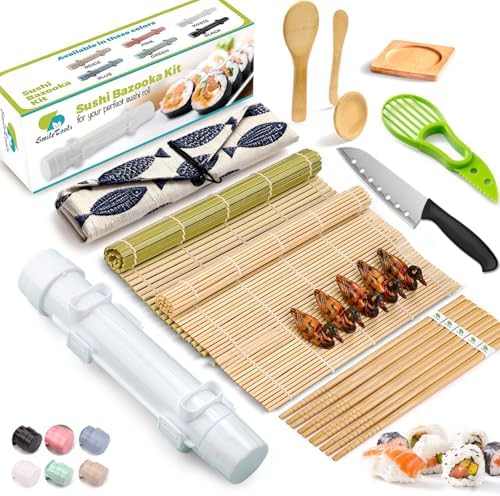
5. SmileTools 22-in-1 Sushi Roller Kit (Best Value Mid-Range)
Best for: Intermediate beginners ready to move beyond basics
What’s Included: Bamboo sushi rolling mats, sushi bazooka, chef’s knife, chopsticks, sauce dishes, rice spreader, avocado slicer, guide book, and more.
This sushi making kit sits in that sweet spot between basic and premium. It offers more than budget kits without the overwhelming piece count of family sets.
Pros:
- Well-balanced tool selection
- Quality bamboo construction
- Sharp included knife
- Detailed guide book
- BPA-free plastic components
Cons:
- Some pieces feel slightly lighter weight
- Instructions could include more photos
- Chopsticks are basic quality
6. MarcZero 22-in-1 Bazooka Roller Kit (Best Bazooka Focus)
Best for: Busy people wanting quick results, meal preppers, large batch makers
What’s Included: Sushi bazooka, 2 bamboo mats, rice paddle, rice spreader, sushi knife with scabbard, 5 bamboo chopsticks, 5 panda chopstick holders, nigiri mold, onigiri mold, musubi mold.
The bazooka tool in this Amazon kit works remarkably well for quick production. You load it with rice and fillings, squeeze, and out comes a perfect cylinder ready to wrap. Takes about 30 seconds per roll once you’ve mastered the technique.
Pros:
- High-quality bazooka mechanism
- Fast roll production capability
- Sharp knife with protective scabbard
- Cute panda chopstick holders
- Natural bamboo materials
Cons:
- Bazooka has a learning curve despite marketing
- Some find traditional rolling more satisfying
- Higher price for essentially a bazooka-focused kit

7. Delamu 27-in-1 Parent-Child Fun Kit (Best for Teaching Kids)
Best for: Parents teaching children, family activities, educational cooking
What’s Included: Bazooka sushi roller, bamboo sushi mats, animal-shaped/triangle/nigiri/gunkan sushi maker, sushi knife, avocado slicer, oil brush, chopsticks, chopstick holders, sauce dishes, spreader, rice paddle, comprehensive guide book.
This specialised sushi making kit focuses on making sushi-making accessible for children whilst maintaining quality for adults. The animal-shaped molds and detailed parent-child guide make it perfect for family bonding.
Pros:
- Specifically designed for parent-child activities
- Animal molds engage children
- Comprehensive 27-piece set
- Quality materials throughout
- Educational and fun approach
Cons:
- Premium pricing
- Some pieces too advanced for young kids
- Storage space required
![Sushi Making Kit - Delamu 27 in 1 [Parent-Child] Sushi Kit, for B...](https://m.media-amazon.com/images/I/51M2FgbAqRL._AC_.jpg)
8. FUNGYAND 27-in-1 Professional Maker Set (Best Mid-Range Complete)
Best for: Enthusiasts ready for restaurant-quality results
What’s Included: Bazooka roller, nigiri and musubi presses, bamboo mats, knife, chopsticks, ceramic dishes, multiple molds for various sushi types.
This sushi making kit represents FUNGYAND’s professional line, offering restaurant-quality tools without the rice cooker’s added cost. It’s comprehensive enough for serious home cooks but doesn’t break the bank.
Pros:
- Professional-grade tools
- Beautiful ceramic dishes included
- Variety of mold options
- Quality knife and bamboo
- Good value for piece count
Cons:
- Learning curve for advanced molds
- Requires storage planning
- Mid-high price range

9. Delamu Basic Bamboo Sushi Mat Kit (Best Minimalist)
Best for: University students, minimalists, testing the waters before bigger investments
What’s Included: 2 bamboo rolling mats, 5 pairs of chopsticks, 1 rice paddle, 1 rice spreader, beginner guide PDF.
Sometimes simplicity wins, and this basic Amazon kit proves it. At around $10-$12, it includes only the essentials without overwhelming new users. I bought one for my daughter’s university flat, and it’s perfect for tight spaces and tighter budgets.
Pros:
- Remarkably affordable
- Machine washable bamboo
- Quality materials despite low price
- Easy to clean and maintain
- Doesn’t overwhelm beginners
- Takes minimal storage space
Cons:
- No knife included
- No molds or fancy extras
- Minimal printed instructions

10. SmileTools 28-in-1 Sushi Roller Kit (Best Comprehensive Mid-Range)
Best for: Serious beginners ready for variety, those who own a rice cooker
What’s Included: Bamboo mats, sushi bazooka, nigiri gunkan sushi mold, musubi maker, rice ball mold, knife, chopsticks, sauce dishes, and more.
This Amazon kit packs serious value into its mid-range price point. At around $28-$35, you get nearly everything from premium kits without the rice cooker, making it perfect for those who already own one.
Pros:
- Comprehensive 28-piece selection
- Multiple mold types included
- Quality bamboo throughout
- Good knife for the price
- Detailed instruction guide
Cons:
- Can feel overwhelming initially
- Some pieces redundant for most users
- Storage space needed

Comparison Table
| Kit Name | Pieces | Knife | Bazooka | Rice Cooker | Best For | Rating |
|---|---|---|---|---|---|---|
| Delamu 20-in-1 | 20 | Yes | Yes | No | Best Overall | 4.7/5 |
| FUNGYAND 32-in-1 | 32 | Yes | Yes | No | Families | 4.6/5 |
| Alas 20-Piece | 20 | Yes | Yes | No | Mid-Range | 4.6/5 |
| CraftZee Premium | 40+ | Yes | Yes | Yes | With Cooker | 4.7/5 |
| SmileTools 22-in-1 | 22 | Yes | Yes | No | Mid-Range | 4.6/5 |
How Do You Clean Bamboo Sushi Mats?
Right, this question matters because improper cleaning ruins good bamboo mats fast.
Immediate After-Use Cleaning:
Straight after you’ve finished rolling, hold your bamboo mat under warm (not hot) running water. Use your hands to gently rub away any stuck rice grains or nori bits. The key word here is “gentle” – bamboo can splinter if you’re too aggressive with scrubbing.
I keep a soft brush (old toothbrush works brilliantly) near my sink specifically for this task. It reaches between the bamboo slats without damaging them. Never use wire brushes or abrasive scourers. Those will shred your mat faster than you can say “California roll,” leaving you with splinters in your next batch of sushi.
The Plastic Wrap Trick:
Here’s something that changed my life and saved countless mats: wrap your bamboo mat in cling film before using it. Seriously, this simple step saves so much cleaning hassle. The rice sticks to the plastic instead of the bamboo, and you just peel off and bin the wrap afterward. No scrubbing required.
Some people reckon this isn’t “authentic,” but I’d rather have an easy clean-up and make sushi more often than spend 15 minutes scrubbing rice out of bamboo grooves.
Drying is Crucial:
This bit cannot be skipped under any circumstances. After washing, shake off excess water vigorously, then stand your mat upright against something (I use my bamboo dish rack). It needs to air dry completely before storage. I mean completely! not just surface dry, but properly dry throughout every bamboo piece.
Moisture trapped in bamboo leads to mold, and bamboo loves to hold onto moisture like a sponge holds water.
What to Absolutely Avoid:
- Never put bamboo mats in the dishwasher (they’ll warp, split, and fall apart)
- Don’t soak them in water for extended periods
- Avoid harsh detergents (warm water and gentle soap if absolutely needed)
- Don’t store whilst even slightly damp
- Keep away from direct heat sources when drying (no radiators or hair dryers)
Storage Tips:
Once completely dry, I roll mine loosely and store in a drawer away from moisture. Some people hang theirs on hooks, which works too. The goal is keeping them dry and away from humidity. My mats last 2-3 years with this care routine, which seems reasonable for something that costs under ten dollars to replace.
For detailed bamboo care tips and more Japanese cooking equipment maintenance, check out Just One Cookbook’s guide – they’ve got brilliant advice for all Japanese cooking tools that actually comes from real experience.
What Is a Sushi Bazooka and How Does It Work?
A sushi bazooka looks weird, I’ll give you that. First time I saw one, I thought someone had lost their mind designing kitchen gadgets. It reminded me more of a toy than a cooking tool. However, after using one for six months, I’ve changed my tune somewhat.
What It Actually Is:
It’s a tube-shaped plastic device (looks vaguely like a bazooka, hence the name) that helps create perfectly cylindrical sushi rolls without traditional rolling techniques. You load rice and fillings into the tube, snap it closed, squeeze the handle, and out pops a rice cylinder ready to wrap in nori. Simple in concept, though execution requires practice.
Step-by-Step Usage:
Let me walk you through how I use mine because the instructions that come with most kits are confusing some times. First, I open the bazooka by pulling apart the two halves. There’s usually a release button or hinge mechanism. The inside has a flat loading area where you spread a thin layer of sushi rice (about 150-200g for a standard roll, though you’ll figure out your preferred amount through trial and error).
Then I arrange my fillings down the centre in a single line such as cucumber strips, avocado slices, maybe some cooked shrimp or tinned tuna mixed with mayonnaise if I’m feeling lazy. Don’t overload it! My first three attempts failed because I stuffed too much filling in, and everything squished out the sides when I tried to close it.
Here’s where it gets clever: I close the device by snapping or clicking the two halves together until they lock. Then I place a sheet of nori on my bamboo mat (you still need the mat for the final step – the bazooka doesn’t eliminate traditional tools entirely). I position the bazooka over the nori sheet and squeeze the handle firmly, which pushes a plunger that forces the rice cylinder out onto the nori.
Finally, I use the bamboo mat to roll the nori around the rice cylinder, sealing the edge with a tiny bit of water on my finger. Takes about 30 seconds once you’ve done it a few times, though my first attempts took ages whilst I figured out the right pressure and positioning.
When It’s Brilliant:
The bazooka shines when you’re making multiple rolls quickly for gatherings. Last week, I made 10 rolls in about 20 minutes for a family meal. With traditional hand-rolling, that would’ve taken me 45 minutes easily, and my hands would’ve been cramping by the end. The uniformity helps too – each roll comes out the same diameter, so they slice consistently and look professional on the plate.
It’s also fantastic if you’ve got limited hand strength or mobility issues. My mother has arthritis, and traditional rolling hurts her fingers after just one or two rolls. The bazooka lets her make sushi pain-free, which matters more than any purist arguments about authenticity.
When It’s Not:
However, I’ll be honest about limitations that the listings on e-commerce sites don’t mention. You can’t make inside-out rolls (uramaki) with a bazooka because the rice ends up outside automatically. This limits creative options if you want to experiment with different styles like California rolls with sesame seeds on the outside.
Also, some fillings don’t work well in the tube format. Chunky ingredients get stuck or create uneven rolls. Soft ingredients like ripe avocado can squish and make a mess. You need to think about what you’re putting in there, which adds an extra planning step.
There’s definitely a learning curve despite all the marketing claims of “instant perfect rolls.”
Bazooka vs Traditional Mat:
I use both methods depending on circumstances and what I’m feeling that day. Quick weeknight dinner? Bazooka wins for efficiency. Weekend experimentation with fancy rolls? Traditional mat gives me more control and creative freedom. They’re different tools for different situations, not replacements for each other.
The traditional mat teaches you proper technique and lets you understand sushi-making fundamentals. The bazooka provides efficiency once you know what you’re doing. I’d say learn the traditional method first for at least a dozen rolls, then add a bazooka for convenience later.
Best Kits with Bazookas:
The Delamu 20-in-1 includes both bazooka and traditional mats, giving you options from day one. The MarcZero 22-in-1 centers everything around the bazooka tool if you’re specifically interested in that method and want premium quality. Both available online with good reviews backing up their quality claims.
Can Kids Use These Sushi Kits?
Absolutely, and I highly recommend it! Making sushi with children has become one of our favourite family activities. My kids help regularly, and they’ve learned genuine cooking skills whilst having a brilliant time.
Safety Considerations Come First:
Obviously, knife safety matters most when children are involved. I don’t let my kids use the sushi knife unsupervised under any circumstances. Instead, I handle all cutting whilst they focus on rolling and shaping, which keeps everyone safe and engaged. Even dull knives deserve respect, and sushi knives should be kept sharp for clean cuts – which means they’re definitely not toys.
Some kits online include plastic safety knives specifically designed for children. These won’t give you professional results, but they’re better than nothing for kids who want to “help with everything” and won’t take no for an answer. The FUNGYAND 32-in-1 kit has decent safety options that won’t actually hurt anyone.
For younger children (under 8), I skip the knife entirely and focus on making onigiri (rice balls) or using the shaped molds. These activities keep them engaged without sharp implement risks. My daughter made panda-shaped rice balls at age 5 with complete independence, and she felt so proud serving them to her grandparents.
Kid-Friendly Kits from Amazon:
The FUNGYAND 32-in-1 Complete Set wins for family use without question. Those animal-shaped molds (pandas, bears, stars, hearts) turn sushi-making into an art project that children adore. My daughter’s favourite is the panda mold – she creates faces using nori cutouts for eyes and mouths, then names each one before we eat them. It’s adorable and slightly concerning in equal measure.
The Delamu 27-in-1 Parent-Child Fun Kit works brilliantly because the molds are simple enough for children to operate independently within minutes. My son figured out the nigiri mold almost instantly and now proudly makes his own portions whilst I supervise.
For very young children (5-7), consider the simpler Delamu Basic Bamboo Sushi Mat Kit without the overwhelming piece count. Too many options confuse little ones and lead to frustration rather than fun. Sometimes less really is more when teaching children new skills.
Educational Benefits:
Making sushi teaches multiple skills beyond cooking, which I appreciate. Fine motor development happens naturally through spreading rice evenly and rolling mats carefully. Following sequential instructions (wash rice, cook rice, season rice, spread, add fillings, roll, seal, cut, plate) builds executive function skills that help in school.
Measuring rice and vinegar introduces practical maths concepts. My daughter understands ratios better from making sushi rice (1:1.2 rice to water) than from any textbook. Practical application beats abstract theory every time for children’s learning.
Cultural education emerges organically during the process. We discuss Japanese cuisine traditions, table manners, and food history whilst cooking together. My children know more about Japanese culture from making sushi than from any textbook or documentary. They ask questions naturally when they’re engaged in hands-on activities.
Plus, there’s something powerful about kids eating vegetables they’ve prepared themselves. My son wouldn’t touch cucumber normally (claims it tastes like “crunchy water”), but he’ll eat it in his own handmade sushi rolls without complaints. Parenting win right there, and I’ll take those victories wherever I can find them!
Age Recommendations Based on My Experience:
- Ages 5-7: Focus on rice balls and simple molds with constant supervision. Keep sessions short (20-30 minutes) before they lose interest.
- Ages 8-10: Can handle basic rolling with supervision, no knife use yet. They can manage 45-minute sessions with breaks.
- Ages 11+: Ready for most tasks with supervision, potentially knife use depending on individual maturity and demonstrated responsibility.
The key is matching complexity to capability whilst keeping activities fun rather than stressful. If they’re frustrated, simplify immediately. If they’re bored, add gentle challenge. Reading your children’s engagement levels matters more than following any prescribed curriculum.
What Ingredients Do I Need Besides the Sushi Making Kit?
Right, let’s talk ingredients because your fancy kit sits useless without proper supplies! This section covers everything from essential staples to optional extras that make your sushi restaurant-quality.
Essential Ingredients (The Must-Haves):
Sushi Rice: You absolutely need short-grain Japanese rice, not regular long-grain varieties. Regular rice won’t work as it doesn’t have the right starch content to stick together properly for rolling. I buy Koshihikari or Nishiki brands from Asian supermarkets or online. A 5kg bag lasts our family of four about 3-4 months with weekly sushi nights.
Don’t even think about using Uncle Ben’s or basmati rice. I tried once when I ran out of proper rice and couldn’t get to the shops. Complete disaster. The rolls fell apart immediately, tasted wrong, and I ended up ordering takeaway whilst feeling like an idiot. Learn from my mistakes and save yourself the frustration.
Rice Vinegar: This seasons your cooked rice and gives sushi its characteristic tang that makes it taste authentic. I use seasoned rice vinegar (the kind with sugar and salt already mixed in) because I’m fundamentally lazy about some things. Traditional cooks make their own seasoning mixture from scratch, but honestly, the pre-seasoned stuff from brands like Mizkan works brilliantly and saves time.
Mirin (sweet rice wine) adds another flavour dimension if you’re being fancy or making special occasion sushi. Optional but nice, and a bottle lasts ages in the fridge.
Nori (Seaweed Sheets): These thin, dark green sheets wrap your rolls and provide that slightly salty, oceanic flavour. Buy them from Asian markets rather than regular supermarkets – better quality, much lower prices. They come in packs of 10-50 sheets on some online stores as well. I go through about 2-3 sheets per person when making maki rolls for dinner. Check the expiration date carefully. Old nori becomes tough, loses its crisp texture, and develops a stale taste. Fresh nori should smell slightly of the sea in a pleasant way, not fishy or off-putting.
Fillings – Fish Options: Here’s where it gets interesting and requires serious attention to food safety. If you’re using raw fish, it MUST be “sushi-grade” or “sashimi-grade.” This means it’s been frozen properly to kill parasites and is genuinely safe for raw consumption. Don’t mess around with this rule. I buy from reputable fishmongers who understand exactly what “sushi-grade” means. When I asked my local supermarket fish counter about sushi-grade salmon, the assistant looked completely confused. That’s a massive red flag. Find a proper source who knows their stuff and can answer your questions confidently.
Popular fish choices: salmon (my personal favourite, forgiving for beginners, widely available), tuna (pricier but absolutely delicious, beautiful colour), yellowtail (if you can find it – harder to source). Cooked options work too and are safer for beginners: cooked prawns (easy, safe, and kids love them), imitation crab sticks (what’s in California rolls, perfectly acceptable), smoked salmon (adds different flavour, no raw fish concerns), tinned tuna mixed with Japanese mayo (sounds odd, tastes brilliant).
Fillings – Vegetable Options: Vegetables make brilliant sushi fillings, and honestly, I prefer them to fish most days. Cucumber (classic, refreshing, adds crunch), avocado (creamy, pairs with everything, nutritious), carrot (cut into matchsticks, adds colour and sweetness), spring onions (sharp flavour, works in small amounts), asparagus (blanch it first, surprisingly good), capsicum (red or yellow for colour, not green). I also experiment with mango (surprisingly good, adds sweetness), cream cheese (controversial but tasty, especially with smoked salmon), pickled radish (adds tang and crunch), mushrooms (shiitake work beautifully when cooked), sweet potato (roasted and cooled, amazing texture).
Essential Condiments: Soy sauce (low-sodium recommended, regular is overwhelmingly salty), wasabi (real wasabi is expensive and rare, the green paste is horseradish-based but perfectly fine), pickled ginger (called gari, cleanses palate between different pieces), sesame seeds (black or white, adds nutty flavour and visual appeal).
Where to Buy: Asian supermarkets remain your absolute best bet for authentic ingredients at reasonable prices. I spend about $30-35 there and have enough supplies for 6-8 sushi nights with my family. The variety and quality beat regular supermarkets hands down. Nori quality especially suffers – those little packs with 10 sheets cost more than bulk packs from Asian markets with better quality. Online options exist too, and Amazon actually stocks many Japanese ingredients now. I’ve ordered from Tokyo Mart and other specialty online retailers with good results when I couldn’t get to an Asian market.
Budget-Friendly Options: Skip raw fish initially whilst you’re learning. Stick with cooked prawns, vegetables, and maybe smoked salmon. This cuts costs significantly as raw sushi-grade fish runs $30-40 per kilo, whereas vegetables cost a fraction of that amount. Make larger batches of seasoned rice and freeze leftovers in portions. It keeps for weeks frozen and defrosts perfectly in the microwave within minutes. Buy vegetables when they’re in season and on sale.
How Do I Make Sushi Rice at Home?
Perfect sushi rice makes or breaks your rolls completely. I’ve tested dozens of methods over three years, and this recipe consistently produces the best results.
Ingredients: 2 cups short-grain Japanese rice (makes enough for 4-5 rolls), 2.4 cups water (1.2:1 water-to-rice ratio), 1/3 cup seasoned rice vinegar, 2 tablespoons sugar (only if using unseasoned vinegar), 1 teaspoon salt (only if using unseasoned vinegar).
Step 1 – Washing: Put your rice in a large bowl and cover completely with cold water. Swish it around vigorously with your hand. The water turns milky white, that’s excess starch coming off. Drain this cloudy water off completely. Repeat 3-4 times until the water runs mostly clear, though it won’t ever be completely transparent. This step matters enormously. Unwashed rice produces gluey, overly sticky sushi that’s unpleasant to eat. The washing process takes about 5 minutes total, so don’t rush it.
Step 2 – Soaking: After washing thoroughly, let rice sit in fresh water for 30 minutes. This allows grains to absorb water evenly, leading to better texture when cooked. I usually do this step whilst I’m prepping other ingredients.
Step 3 – Cooking: Drain the soaked rice thoroughly using a fine-mesh strainer. Add it to your pot with the measured water (2.4 cups for 2 cups of rice). Put the lid on tightly and bring to a boil over medium-high heat. Once boiling vigorously, reduce heat to low immediately. Simmer for 15 minutes with the lid on. Don’t lift the lid to check! After 15 minutes, remove from heat but leave the lid on for another 10 minutes. This steaming step completes the cooking process.
Step 4 – Seasoning: Transfer your cooked rice to a large, shallow bowl. If using unseasoned rice vinegar, mix it with sugar and salt in a small saucepan and heat gently until dissolved. If you’re using pre-seasoned rice vinegar like me, skip this mixing step. Pour the vinegar mixture over the hot rice gradually, drizzling it across the surface. Use a rice paddle to gently fold it in using cutting and folding motions. Don’t stir vigorously or you’ll mash the rice grains. Whilst folding, have someone fan the rice continuously (or prop up a small electric fan). This cooling process gives the rice its characteristic shine.
Step 5 – Cooling: Keep folding and fanning until the rice reaches room temperature. This takes about 10-15 minutes. The rice should feel slightly warm but not hot when you touch it.
Common Mistakes: Don’t add vinegar to cold rice – it won’t absorb properly. Don’t over-stir when mixing – you’ll break rice grains. Don’t use too much vinegar – your sushi will taste overly sour. Don’t use rice that’s too hot for rolling – it’ll make your nori soggy.
Storage: Use sushi rice within 2-3 hours for best results. If you need to store it longer, cover with a damp towel to prevent drying out. Don’t refrigerate unless absolutely necessary as cold rice becomes hard and loses its texture.
Time to Roll Your Way to Sushi Success!
Right then, we’ve covered everything from choosing the perfect sushi making kit to mastering rice technique. Making sushi at home transforms from intimidating to genuinely enjoyable once you’ve got the right tools. Whether you choose the comprehensive Delamu 20-in-1 for its versatility, the budget-friendly Alas set for testing the waters, or the premium CraftZee kit with its rice cooker, the important bit is actually starting.
My recommendation for absolute beginners? Start with the Delamu 20-in-1 kit from Amazon and simple vegetable rolls. Master cucumber rolls before attempting fancy fish combinations. Learn proper rice technique before worrying about presentation. Build confidence through repetition rather than trying to make restaurant-quality sushi on your first attempt.
Remember that even experienced sushi chefs produced rubbish rolls when they started learning. My first California roll looked like it had been through a blender. My second wasn’t much better. By my tenth attempt, things started looking edible. By my twentieth, I felt confident enough to serve them to guests. Progress happens through practice, not perfection.
Quality ingredients matter just as much as quality tools, so don’t cheap out on rice or nori. Spend the extra few dollars for proper short-grain Japanese rice and fresh nori sheets. Your taste buds will thank you, and your rolls will actually stay together instead of falling apart on the plate.
If you’re making sushi with children, focus on fun rather than perfection. Those wonky panda-shaped rice balls taste just as good as perfectly formed nigiri, and the memories you’re creating matter more than Instagram-worthy presentation. My kids still talk about our first sushi night when everything went wrong but we laughed the entire time.
One final reminder about food safety – if you’re using raw fish, only use properly certified sushi-grade fish from reputable sources. When in doubt, stick with cooked options. There’s absolutely no shame in making sushi with vegetables, cooked prawns, or tinned tuna. Delicious food doesn’t require risk-taking with food safety.
Now it’s your turn! Grab a sushi making kit, source your ingredients, and roll your first piece of sushi. Will it be perfect? Probably not. Will it be edible and fun? Absolutely. That’s what matters most.
I’d love to hear about your sushi-making adventures! Drop a comment below sharing which kit you chose, what fillings you tried, or any questions that came up during your first attempts. If you’ve got tips that worked brilliantly for you, share them – we’re all learning together, and your experience might help someone else avoid the mistakes we all made at the beginning. Happy rolling, and remember – even dodgy-looking homemade sushi tastes better than no sushi at all!
Frequently Asked Questions
Can I make sushi without a bamboo mat? Technically yes, but it’s much harder. You can use a thick kitchen towel covered in cling film, but bamboo mats cost under $10 and make the process significantly easier. Worth the investment.
How long does homemade sushi last? Sushi with raw fish should be eaten the same day, ideally within 2-3 hours of making it. Vegetable sushi lasts slightly longer of up to 24 hours refrigerated – but the rice texture deteriorates. Sushi tastes best fresh.
Do I need special knives for cutting sushi? A sharp regular knife works fine for beginners. Japanese sushi knives give cleaner cuts and look professional, but they’re not essential when you’re starting out. Many quality sushi making kits include decent knives.
What’s the easiest type of sushi to make at first? Cucumber maki rolls (hosomaki) are the easiest. Single ingredient, no food safety concerns, and they teach proper rolling technique. Master these before attempting multi-ingredient rolls.
Can I make sushi ahead of time for parties? You can prep ingredients hours ahead, but roll sushi as close to serving time as possible. Rice dries out, nori gets soggy, and overall quality drops quickly. I usually make sushi 30-60 minutes before guests arrive, cover with damp tea towels, and refrigerate briefly.
Why does my sushi rice come out mushy? Either you didn’t wash away enough starch, used too much water, or stirred too vigorously when adding vinegar. Follow the 1:1.2 rice-to-water ratio exactly and use gentle folding motions when seasoning.
What if I can’t find sushi-grade fish? Make vegetarian sushi or use cooked ingredients! Some of the tastiest rolls contain no raw fish whatsoever. Sweet potato tempura rolls, cucumber avocado rolls, and cooked prawn rolls are all brilliant options.
How tight should I roll sushi? Firm enough to hold together but not so tight that rice squishes out the sides. This takes practice to get right. Most beginners roll too loosely at first, then overcorrect and roll too tightly. You’ll find your sweet spot after 5-10 attempts.
Can I use brown rice instead of white sushi rice? Brown rice doesn’t have the right starch content for proper sushi texture. It won’t stick together well enough for rolling. If you prefer brown rice for health reasons, consider making sushi bowls (deconstructed sushi) instead where stickiness matters less.
How do I prevent rice from sticking to my hands? Keep a bowl of water mixed with a tiny bit of rice vinegar nearby (called tezu). Dip your fingers in it regularly whilst handling rice. This creates a barrier that prevents sticking. Works brilliantly and is how professional sushi chefs do it.


