
How to make ‘Authentic’ Pad Kee Mao (Drunken Noodles) at home?
Learn how to make authentic Pad Kee Mao at home with wide rice noodles, Thai basil, and a bold spicy sauce. Better than takeaway!

Did you know that authentic Pad Kee Mao – one of the most popular noodle dishes in all of Thailand, literally translates to “drunk man’s noodles”? What a name, right! The first time I ordered it from a tiny street stall in Chiang Mai, I genuinely didn’t know what I was in for. I just pointed at what the bloke next to me was eating, and honestly, that was one of the best decisions of my life. The noodles were silky and chewy, the sauce was salty and spicy and just a little sweet, and there was this gorgeous charred, smoky smell coming off the wok that I still think about to this day.
Authentic Pad Kee Mao is the kind of dish that sounds fancy but is actually dead simple once you get your head around it. It’s Thai street food at its finest, bold, unapologetic, and absolutely packed with flavour. And yet, for some reason, a lot of home cooks are a bit scared to attempt it. They think it requires some secret technique or a restaurant-grade burner. It really doesn’t. I’ve been making this at home for years now, and I can walk you through every single step.
In this guide, we’ll cover everything from the history of the dish and the best noodles to use, through to a full step-by-step authentic Pad Kee Mao recipe you can nail on a Tuesday night. Let’s get into it!
What Is Pad Kee Mao (Drunken Noodles), Anyway?
So, what exactly is Pad Kee Mao? At its core, it’s a Thai stir fry noodle dish made with wide, flat rice noodles, called Sen Yai, tossed in a bold, savoury sauce with vegetables, protein, and a huge handful of fresh Thai basil. It’s spicy, it’s fragrant, and it has a slightly smoky edge that comes from cooking over very high heat.
The name “drunken noodles” has a few possible origin stories. None of them are confirmed, which makes it even more fun to talk about. The most popular theory is that the dish was created as a late-night cure for a hangover, basically something you’d whip up from whatever random ingredients were lying around in the kitchen after a big night out. Another story suggests the dish is so spicy it makes you feel like you need a drink just to cool down. A third version says that Thai cooks would sometimes add a splash of rice wine or beer to the wok while cooking, hence the “drunken” tag. I personally love that last one, even if it’s probably not true.
What’s interesting is that authentic Pad Kee Mao isn’t some ancient, formal dish with a documented history. It’s more of a modern Thai street food classic that evolved over the last few decades. You’ll find variations of it all over Thailand, from Bangkok’s street stalls to the night markets up in Chiang Mai. In the south, you might see it made with seafood. In the north, it often gets a bit spicier. Regional variations are totally normal, and that’s what makes it such a versatile dish to adapt at home. For more context on Thai street food culture, Serious Eats has a great deep dive worth reading.
What Noodles Do You Use for Pad Kee Mao?

This is one of the most important things to get right, and it’s where a lot of home cooks go wrong. Authentic Pad Kee Mao is made with Sen Yai noodles, wide, flat, fresh rice noodles that are silky on the outside and beautifully chewy in the middle. They’re roughly 1–2 cm wide and they soak up the sauce like an absolute dream. If you’ve ever had authentic Pad Kee Mao from a Thai restaurant and wondered why yours at home tasted different, the noodle is probably the culprit.
Fresh Sen Yai noodles are available from most Asian grocery stores. You’ll usually find them in the refrigerated section, and they sometimes come as one big flat sheet that you pull apart yourself before cooking. They can be a bit clumpy when cold, so make sure to separate them gently where you can give them a quick 30-second dunk in warm water to loosen them up if needed. Whatever you do, don’t boil them. They don’t need it, and you’ll turn them to mush if you do.
If you can’t find fresh noodles, dried wide rice noodles work fine as a substitute. Soak them in cold water for about 30–45 minutes before cooking rather than boiling them as you want them soft but still with a bit of bite, because they’ll finish cooking in the wok. Brands like Erawan and Three Elephants are solid options that are available online if your local Asian grocer doesn’t stock them.
Amazon products worth checking out:
- Roland Foods Wide Rice Noodles — a great dried option for keeping in the pantry
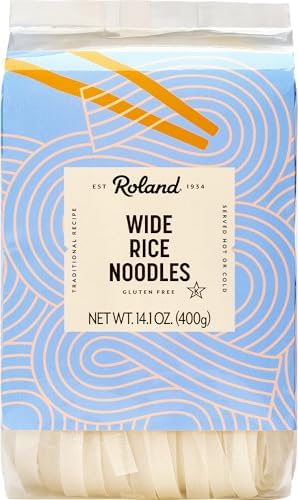
Fresh is always best, but a well-soaked dried noodle will absolutely do the job in a pinch.
What’s the Difference Between Pad Kee Mao and Pad See Ew?
I get asked this all the time. These two dishes look pretty similar at first glance, both use wide rice noodles, both are Thai stir fries, and both have a dark, savoury sauce. But once you taste them side by side, the difference is pretty obvious.
| Feature | Pad Kee Mao (Drunken Noodles) | Pad See Ew |
|---|---|---|
| Sauce profile | Spicy, punchy, slightly herby | Sweet, rich, mellow |
| Spice level | High — lots of fresh chilli | Low to none |
| Key herb | Fresh Thai basil (heaps of it) | No fresh herbs |
| Veggies | Capsicum, baby corn, birdseye chilli | Chinese broccoli (gai lan) |
| Texture | Slightly drier, more charred edges | Saucier, glossier |
| Sauce ingredients | Oyster sauce, fish sauce, dark soy, chilli | Oyster sauce, dark soy, sugar |
| Overall vibe | Bold, spicy, fragrant | Comforting, sweet, simple |
Basically, if you want something bold and spicy with a herby kick, Pad Kee Mao is your dish. If you want something more mellow and sweet and almost like a Thai version of comfort food, then go for Pad See Ew. I tend to reach for Pad Kee Mao when I want something punchy after work, and Pad See Ew when it’s a lazy Sunday and I want something a bit more gentle. Both are brilliant, and once you’ve mastered one, the other is easy to pick up. Hot Thai Kitchen has a brilliant Pad See Ew recipe if you want to compare the two.
How Do You Make Authentic Pad Kee Mao Sauce from Scratch?
The sauce is the soul of this dish. Get it right and everything else falls into place. Get it wrong and it’ll taste flat no matter how good your noodles are. The good news is that the sauce is pretty straightforward once you understand what each ingredient actually does.
Here’s my go-to sauce formula for two servings:
- 2 tbsp oyster sauce — this is your umami backbone, rich and slightly sweet
- 1 tbsp fish sauce — adds saltiness and that funky depth you can’t really fake
- 1 tbsp dark soy sauce — for colour and a subtle caramel note
- 1 tsp light soy sauce — a bit more saltiness without darkening the dish further
- 1 tsp white sugar — balances the salt and the heat
- 1 tsp Thai chilli paste (Nam Prik Pao) — optional, but adds a lovely smoky complexity
Mix all of this together in a small bowl before you start cooking. Seriously, this step is non-negotiable. Once the wok is screaming hot, you have about 30 seconds per step, and you do not want to be measuring things out on the fly. Have your sauce ready, your noodles separated, your veggies chopped, your protein prepped. It’s called mise en place in the fancy cooking world, but really it’s just common sense.
The balance you’re aiming for is salty, slightly sweet, and umami-rich and with the heat coming from fresh chilli rather than the sauce itself. Some cooks add a splash of water or chicken stock to the sauce to make it stretch a bit further, which is totally fine. I sometimes add a tiny squeeze of lime juice right at the end too. Not traditional, but it brightens the whole thing up beautifully. Woks of Life has a great breakdown of Thai sauce ratios if you want to dig deeper.
Pantry essentials to grab from Amazon:
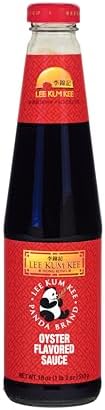
- Lee Kum Kee Oyster Sauce — a Thai brand that’s noticeably more savoury than most Chinese varieties
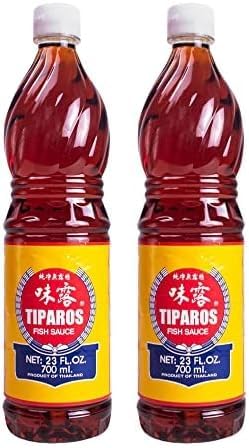
- Tiparos Fish Sauce — clean, well-balanced, and not overly pungent
- Lee Kum Kee Premium Dark Soy Sauce — a Thai kitchen staple, thick and glossy

What Vegetables and Proteins Go in Drunken Noodles?
One of the things I love about authentic Pad Kee Mao is how flexible it is with ingredients. The authentic version uses a fairly specific set of ingredients, but you can honestly riff on it based on what’s in your fridge. That’s sort of the whole spirit of the dish as it was born from improvisation.
Traditional vegetables:
- Fresh Thai basil — non-negotiable. And I mean it. This is NOT Italian basil. Thai basil has a slightly anise-like flavour and holds up to the heat of a wok far better. If you skip it or substitute regular basil, you’ll end up with a dish that’s missing its soul.
- Birdseye chillies — sliced fresh for heat. Use 2–4 depending on your tolerance.
- Red capsicum — adds colour and a gentle sweetness that balances the heat
- Baby corn — traditional in many Thai versions, adds a fun crunch
- Snake beans (long beans) — cut into 3–4 cm pieces, a great addition if you can find them at an Asian grocer
Protein options:
- Chicken thigh — my personal go-to, it stays juicy and picks up char beautifully
- Beef (flank or rump) — slice it thin across the grain and marinate briefly in a little bicarb soda and soy for tenderness
- Prawns — cook fast and taste amazing, very popular in coastal Thai versions
- Tofu — firm tofu, pan-fried until golden and crispy before adding to the wok
Whatever protein you use, resist the urge to overcrowd the wok. Cook the protein first in a blazing hot wok, remove it, then cook the noodles, and add the protein back at the end. Overcrowding drops the temperature dramatically and you end up steaming everything instead of searing it. You lose the colour, the char, and honestly a fair bit of flavour too.
Step-by-Step Authentic Pad Kee Mao Recipe
Here’s the full recipe. This makes two generous servings.
Ingredients
For the sauce (mix in a bowl before cooking):
- 2 tbsp oyster sauce
- 1 tbsp fish sauce
- 1 tbsp dark soy sauce
- 1 tsp light soy sauce
- 1 tsp white sugar
For the stir fry:
- 300g fresh wide rice noodles (Sen Yai), gently separated
- 200g chicken thigh, thinly sliced (or protein of choice)
- 3–4 cloves garlic, roughly chopped
- 3–4 fresh birdseye chillies, sliced
- ½ red capsicum, sliced
- ½ cup baby corn, halved lengthways
- 1 large handful fresh Thai basil leaves
- 2 tbsp neutral oil (vegetable, rice bran, or canola)
- 1 egg (optional, but excellent)
Method
Step 1 — Prep everything before you touch the stove.
Mix your sauce in a bowl and set it aside. Separate your noodles gently. Have all your vegetables chopped and your protein sliced. This dish cooks in about 5–6 minutes total, so there is literally no time to prep once the wok is hot.
Step 2 — Get your wok screaming hot.
Place your wok (or large cast iron pan) over the highest heat your stove can manage. Add 1 tablespoon of oil and let it heat until it just starts to smoke. This is your foundation for getting some wok hei, it’s that smoky, charred quality that makes Thai stir fry noodles taste like they came off a street stall.
Step 3 — Sear the protein.
Add your chicken in a single layer and leave it alone for 60–90 seconds to get a good sear. Then stir fry for another minute until just cooked through. Remove from the wok and set it aside on a plate.
Step 4 — Fry the aromatics.
Add another small splash of oil if the wok looks dry. Toss in the garlic and chillies. Stir fry for about 30 seconds until fragrant, then you’ll smell it immediately. Don’t let the garlic burn; work fast.
Step 5 — Add the noodles and sauce.
Add the noodles to the wok. Pour the pre-mixed sauce over the top. Use tongs or a wok spatula to toss everything together until the noodles are evenly coated in that dark, glossy sauce. Let the noodles sit undisturbed for about 30 seconds at a time to develop some colour on the underside, then toss and repeat.
Step 6 — Add the vegetables.
Toss in the capsicum and baby corn. Stir fry for about 60 seconds, then you want them softened slightly but still with a bit of crunch and life in them.
Step 7 — Add the egg (optional but recommended).
Push everything to one side of the wok and crack the egg into the cleared space. Scramble it briefly, then fold it through the noodles before it fully sets. It adds richness and a lovely custardy texture throughout the dish.
Step 8 — Return the protein and add the Thai basil.
Add the seared protein back to the wok. Pull the wok off the heat (or turn it off) and add the Thai basil. Toss everything together and let the residual heat wilt the basil perfectly without cooking it into bitterness.
Step 9 — Plate and eat immediately.
This is not a dish that waits around. Serve it straight away, with a squeeze of fresh lime and a few extra sliced chillies on top if you like.
How Do You Get That Smoky Wok Hei Flavour at Home?

Wok hei – sometimes written as wok hay – is a Cantonese term meaning “breath of the wok.” It’s that elusive, slightly smoky, charred character you get from restaurant Thai and Chinese stir fries that’s genuinely hard to replicate at home. The reason restaurants achieve it so easily is because their commercial gas burners pump out anywhere from 50,000 to 100,000 BTU of heat. Your home stove? Maybe 10,000–15,000 BTU on a good day.
So how do you close that gap? A few things have made a real difference in my own cooking.
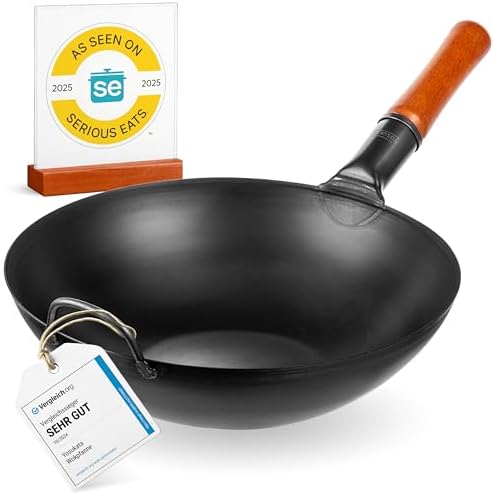
First, use a carbon steel wok or cast iron pan. Not stainless steel, and absolutely not a non-stick pan. A properly seasoned carbon steel wok retains and distributes heat far better, and will give you more char on those noodles. The Yosukata Carbon Steel Wok is one I’ve recommended to mates who got serious about Asian cooking at home — it’s well-built and gets very hot very quickly.
Second, cook in smaller batches. Overcrowding the wok tanks the temperature fast and you end up steaming everything instead of searing it. It’s better to make two separate batches than to cram a huge amount into one cook.
Third, dry everything off before it goes in the wok. Pat your chicken dry with paper towel. Spin your vegetables in a salad spinner or pat them dry. Moisture is the enemy of high heat cooking — it creates steam, which kills your char.
Fourth, on a gas stove, let the flame lick a little up the sides of the wok. It’s dramatic, it feels slightly dangerous, and it genuinely helps. For electric or induction, get a flat-bottomed wok and preheat it for a few solid minutes before anything goes in. Woks of Life has a brilliant explainer on wok hei at home that’s worth bookmarking.
Equipment worth investing in:
- Yosukata Carbon Steel Wok 34cm — flat-bottomed, suitable for home stoves including induction
- Lodge 12-inch Cast Iron Skillet — a fantastic alternative, handles high heat brilliantly

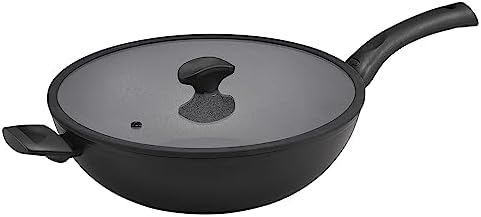
Can I Make Authentic Pad Kee Mao Without a Wok?
Yes, you absolutely can. I made authentic Pad Kee Mao in a 12-inch cast iron skillet for about a year before I eventually got a carbon steel wok, and it worked really well. The key is using something with either high, sloped sides or enough surface area to spread the noodles out, and the ability to handle very high heat without warping or giving off fumes.
A large, heavy stainless steel pan or cast iron skillet are both solid choices. Avoid non-stick pans as you can’t safely get them hot enough, and the coating tends to break down at the temperatures you need for this style of cooking. If you’re going with a regular frying pan, you might not get quite the same depth of char on the noodles, but the flavour of the sauce and the aromatics will absolutely carry the dish.
One practical tip for non-wok cooking: let the noodles sit undisturbed in the pan for 30–45 seconds at a stretch rather than constantly moving them around. That rest time is what creates the colour on one side, which is the closest approximation to wok hei you’ll get on a standard home stove.
Products worth considering:
- Essteele Per Vita Stainless Steel Open Wok (28cm) — great for induction cooktops and very easy to clean
- Lodge 12-inch Cast Iron Skillet — handles high heat like a champ and genuinely lasts a lifetime
Is Authentic Pad Kee Mao Spicy, and Can I Adjust the Heat?
Yes, authentic Pad Kee Mao is traditionally a spicy dish, and it doesn’t apologise for it. The heat comes primarily from fresh birdseye chillies (also called Thai chillies), and a traditional street food recipe might use anywhere from 4 to 8 of these little guys per serve. For reference, a birdseye chilli sits at roughly 50,000–100,000 Scoville heat units , so about 10 to 100 times hotter than a jalapeño. So they do mean business.
That said, you are completely in control of the heat level in your own kitchen. Here’s a rough guide:
- Mild: Use 1 chilli with the seeds removed, and consider adding a small amount of sweet chilli sauce to the sauce mix for a hint of chilli flavour without the burn.
- Medium: 2–3 chillies with seeds is a nice middle ground, but noticeable heat and comfortable for most people.
- Hot: 4–6 chillies is roughly where traditional Thai street stall Pad Kee Mao lands. Bold, punchy, satisfying.
- Very hot: If you’re going all in, 6–8 chillies plus a teaspoon of sambal oelek stirred into the sauce. You’ll definitely feel it.
If you can’t find birdseye chillies, red serrano chillies are a decent substitute with a similar heat level. Dried chilli flakes work in a pinch too, though the heat character is slightly different where dried chilli gives a deeper, smokier burn rather than the bright, fresh heat of birdseye. One thing to note: the spice hits differently when the dish cools down, so what feels manageable straight off the wok might feel a bit more intense a few minutes later. Worth keeping in mind when you’re tasting for seasoning.
Can I Make Vegetarian or Vegan Authentic Pad Kee Mao?
You can, and honestly, a good vegan version of this dish is genuinely impressive. The two main non-vegan ingredients are fish sauce and oyster sauce, but both have excellent plant-based substitutes that are increasingly easy to find.
Fish sauce substitute: Vegan fish sauce is a real thing now, and the good ones are surprisingly convincing. The Ocean’s Halo Soy-Free Fish Sauce Alternative uses seaweed and shiitake mushrooms to replicate that funky, briny depth. Alternatively, a mix of soy sauce with a small pinch of seaweed powder works well. Coconut aminos is a milder option if you want to keep the saltiness but skip the funk altogether.
Oyster sauce substitute: Mushroom-based vegetarian oyster sauce is widely available at Asian grocery stores and online. The Lee Kum Kee Vegetarian Stir-Fry Sauce is a great one and it’s made from shiitake mushrooms and has nearly the same rich, glossy character as the real thing. I’ve used it in a pinch when I ran out of regular oyster sauce and honestly could barely tell the difference.
Protein: Firm tofu is the classic plant-based choice here. Press it really well to remove as much moisture as possible, then pan-fry it in neutral oil until golden and crispy on all sides before it goes into the wok. King oyster mushrooms are also brilliant as they have a meaty, satisfying texture and soak up the sauce beautifully.
Also worth double-checking that your dark soy sauce is vegan and most are, but a handful of brands use non-vegan clarifying agents. Kikkoman is reliably vegan and easy to find. For more vegan Thai cooking ideas, Hot Thai Kitchen’s vegan recipe section is a great resource, Pailin’s recipes are thorough, accurate, and genuinely delicious.
Noodle Nirvana Awaits: Now Get Cooking!
And there you have it! Everything you need to make a genuinely authentic Pad Kee Mao at home. From the origin story behind the name, through to the right noodles, the sauce breakdown, the full step-by-step recipe, and tips for nailing that smoky wok hei on a home stove. It’s one of those dishes that seems a bit intimidating at first, but after you’ve made it a couple of times it becomes one of the easiest, most satisfying things in your weeknight rotation.
The key things to keep in mind: get your wok hot before anything goes in, prep absolutely everything before you turn the stove on, don’t you dare skip the Thai basil, and take the time to taste and balance your sauce before you cook. Everything else is just details. And feel free to riff by swapping the protein, use different veggies, dial the heat up or down to suit your household. Authentic Pad Kee Mao was always meant to be a little bit improvised, and that’s what makes it so fun to cook.
If this is your first time making it, I’d genuinely love to hear how it goes. Drop a comment below, tell me what protein did you use, how many chillies did you go with, and did you manage to get that beautiful smoky char? And if you’ve got your own tips or tricks for making Thai stir fry noodles at home, please share them. I’m always keen to learn something new in the kitchen. Happy cooking! 🍜
This post contains affiliate links. If you purchase through these links, I may earn a small commission at no extra cost to you. I only recommend products I’ve personally used or genuinely trust.


