
Cooking with Coconut Oil: Tips, Tricks & Benefits
Discover how cooking with coconut oil can transform your meals. Learn smoke points, health benefits, and expert tips for frying, baking, and more.
Disclaimer: As an Amazon Associate I earn from qualifying purchases from our site. Thank you for your support!

I’ll be honest with you, I was a sceptic for a long time. Back in my early cooking days I thought coconut oil was just some health-food trend that would fade out like spirulina smoothies. Then one Saturday morning, completely out of butter, I grabbed a jar of coconut oil to fry my eggs. The smell alone won me over before I even tasted them. Since then, cooking with coconut oil has become a genuine staple in my kitchen – not because some Instagram post told me to, but because it actually works brilliantly.
In this guide I’m going to walk you through everything I’ve learned about cooking with coconut oil over the years. We’ll talk about smoke points, health benefits, the great refined-versus-virgin debate, and I’ll even share a killer banana bread recipe. Stick around as this one’s worth your time.
What Is the Smoke Point of Coconut Oil?
Before we get into the fun stuff, we need to talk smoke points. I know, I know – sounds a bit boring, but trust me, this is genuinely important for both the flavour and safety of your cooking.
The smoke point is the temperature at which an oil stops shimmering and starts, well, smoking. When oil hits its smoke point, it begins to break down, releasing free radicals and producing a compound called acrolein, which tastes bitter and isn’t great for you. So cooking beyond the smoke point is something you really want to avoid.
Here’s where coconut oil gets interesting. Unlike a lot of oils, it actually comes in two versions that have quite different smoke points. Virgin (unrefined) coconut oil has a smoke point of around 177°C (350°F), while refined coconut oil pushes up to about 232°C (450°F). That’s a massive difference and it changes how you should be using each one.
| Oil Type | Smoke Point (°C) | Smoke Point (°F) | Best Use |
|---|---|---|---|
| Virgin Coconut Oil | 177°C | 350°F | Low-heat sautéing, baking, spreading |
| Refined Coconut Oil | 232°C | 450°F | Stir-frying, roasting, high-heat searing |
| Extra Virgin Olive Oil | 190°C | 375°F | Dressings, low–medium heat cooking |
| Butter (unsalted) | 150°C | 302°F | Gentle sautéing, baking (low temp) |
| Vegetable Oil | 220°C | 428°F | Deep frying, high-heat cooking |
| Ghee | 252°C | 485°F | Very high-heat cooking, frying |
I made the mistake once of using virgin coconut oil to sear a chicken breast in a screaming hot pan. The kitchen filled with smoke and the flavour was frankly off. Now I keep two jars in my pantry – one virgin, one refined – and I use them depending on what I’m cooking. The refined one lives next to the stove. The virgin one goes in my baked goods and morning porridge.
For a more detailed breakdown on cooking oils and their temperatures, Serious Eats has a brilliant guide on fats and oils that I keep bookmarked.
What Are the Health Benefits of Cooking with Coconut Oil?

Right, so this is where things get a little complicated, and I want to be upfront with you – the science around coconut oil and health is genuinely nuanced. I’m not a nutritionist, but I’ve done a lot of reading on this, so let me share what I know.
The big talking point with coconut oil is its medium-chain triglycerides, or MCTs. Unlike the long-chain fatty acids you get in most oils, MCTs are processed differently by the body. They head straight to the liver and are used for energy rather than being stored as fat. Some research suggests this can support metabolism and even provide quick fuel for the brain. That said, most of the coconut oil you buy is not pure MCT oil – it contains a mix of fatty acids, including lauric acid, which makes up about 50% of its content.
Lauric acid is pretty fascinating stuff. Studies have shown it has antimicrobial and antifungal properties, and it raises HDL (the “good” cholesterol) alongside LDL. Whether that net effect on heart health is positive is still being debated by researchers, but the picture is more complex than the old “saturated fat is bad, full stop” narrative suggested.
Another real benefit from a cooking perspective is oxidative stability. Because coconut oil is mostly saturated fat, it doesn’t oxidise as easily under heat as polyunsaturated oils like canola or sunflower oil. When those oils oxidise, they produce harmful compounds. Coconut oil, even under moderate heat, remains relatively stable. So for everyday cooking, it’s actually a sensible choice.
For the full science, Healthline has a well-researched rundown on coconut oil’s health properties that’s worth reading.
Tip: If you’re specifically after the MCT benefits, consider using a dedicated MCT oil for your coffee or smoothies and save your coconut oil for actual cooking – you’ll get the best of both worlds.
Virgin vs Refined Coconut Oil – Which Should You Cook With?
This is probably the question I get asked most when people find out I’m into cooking with coconut oil. And the answer, like most good cooking answers, is: it depends on what you’re making.
Virgin (or extra virgin) coconut oil is made by cold-pressing fresh coconut meat. It retains its natural flavour, aroma, and the bulk of its nutrients. You’ll smell it from across the kitchen – that warm, tropical, slightly sweet scent. It’s gorgeous in baking, fantastic in curries and Southeast Asian dishes, brilliant stirred into oatmeal or blended into a smoothie.
Refined coconut oil, on the other hand, is made from dried coconut meat (called copra) that goes through a refining process to remove the flavour and scent. The result is a completely neutral oil. No coconut taste whatsoever. And that higher smoke point of 232°C makes it a proper all-rounder. I use refined coconut oil when I’m making something where I don’t want a coconut flavour – like sautéed garlic mushrooms or a bolognese sauce.
Recommended Products
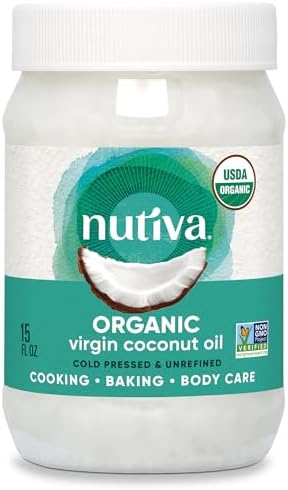
- Nutiva Organic Virgin Coconut Oil – Cold-pressed, raw, certified organic. Perfect for baking and low-heat cooking.
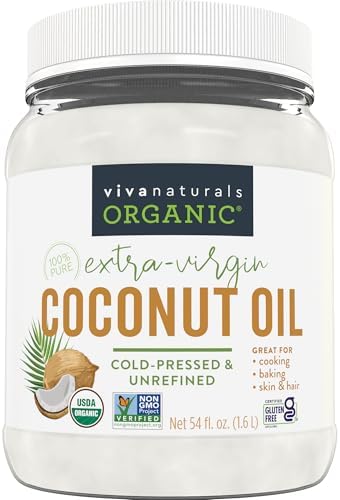
- Viva Naturals Refined Coconut Oil – Neutral flavour, high smoke point, great for everyday frying and roasting. Find on Amazon
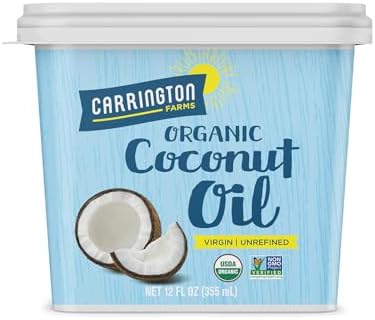
- Carrington Farms Organic Coconut Cooking Oil – Super convenient for greasing pans without overdoing it on oil.
| Feature | Virgin Coconut Oil | Refined Coconut Oil |
|---|---|---|
| Smoke Point | 177°C (350°F) | 232°C (450°F) |
| Flavour | Distinct coconut taste and aroma | Neutral, no coconut taste |
| Processing | Cold-pressed from fresh coconut | Processed from dried copra |
| Nutrient Retention | Higher (more antioxidants) | Lower |
| Best For | Baking, curries, low-heat cooking | Frying, roasting, stir-fries, searing |
| Price (approx.) | Higher | Lower |
| Shelf Life | 1–2 years | 2+ years |
My personal preference? I keep both. Virgin for flavour, refined for function. If I had to pick just one and budget was tight, I’d go refined – more versatile for everyday cooking.
Is Coconut Oil Good for Cooking at High Heat?
This one’s a common worry, and the short answer is: refined coconut oil is excellent for high heat; virgin coconut oil is not.
Here’s why. Saturated fats – which coconut oil is loaded with (about 90% saturated fat, actually) – are far more chemically stable than polyunsaturated fats when exposed to heat. That stability means they’re less likely to oxidise and form harmful compounds when you crank up the temperature. This is genuinely good news for cooking.
With refined coconut oil’s smoke point sitting at 232°C, you can confidently use it for stir-frying, oven-roasting vegetables, searing meat, and shallow frying. I’ve used it for roasted sweet potato wedges more times than I can count – crispy on the outside, fluffy on the inside, every single time.
What you absolutely don’t want to do is deep fry using virgin coconut oil. The 177°C limit means your oil will be smoking before your chips are even close to golden. Worse, the coconut flavour will be all over your food, which is weird when you’re expecting hot chips to taste like hot chips.
When oil passes its smoke point, you’ll notice a bluish-grey smoke rising from the pan, a bitter or acrid smell, and food that tastes burnt and off. If that happens, take the pan off the heat, let it cool, wipe it out, and start fresh. Don’t try to salvage it. I’ve been there – it ruins the dish.
For more on oil stability at high heat, this study published on PubMed on cooking oil oxidation is genuinely eye-opening reading.
Can You Use Coconut Oil Instead of Butter?
Absolutely, yes. And this is probably one of my favourite tricks in the kitchen, especially when I’m cooking for mates who are dairy-free.
For most cooking applications, you can swap butter for coconut oil at a 1:1 ratio. Sautéing onions and garlic? Coconut oil works a treat. Greasing a baking tin? Great substitute. Spreading on toast? If you use virgin coconut oil and you like a hint of coconut, it’s honestly delicious – especially with a pinch of sea salt on sourdough.
In baking, it’s slightly more nuanced. Coconut oil is 100% fat, while butter is around 80% fat with some water and milk solids. This means baked goods made with coconut oil can come out slightly denser and with a different crumb texture. I’ve made chocolate chip cookies with coconut oil instead of butter and they were slightly chewier, which my kids actually preferred. But my shortbread was a bit too crumbly – so for pastry and shortbread, I’d stick with butter.
One trick I’ve picked up: if a recipe calls for melted butter, use melted coconut oil straight. If it calls for creamed butter (beaten with sugar until fluffy), it doesn’t work as well because coconut oil doesn’t cream the same way. In that case, try a half-and-half blend.
Great Butter Swap Products
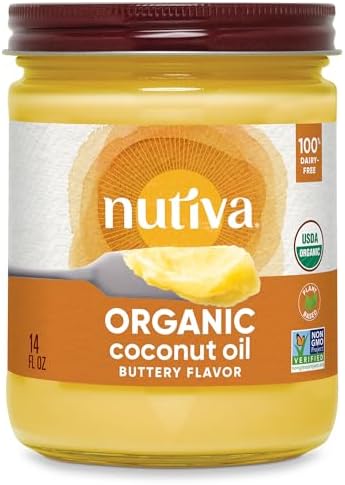
- Nutiva Organic Coconut Oil with Non-Dairy Butter Flavor – Brilliant for baking and spreading when you want that buttery taste without dairy.
Does Coconut Oil Make Food Taste Like Coconut?
This is the question that stops a lot of people from trying it, and honestly it’s a fair concern. The answer is: it depends entirely on which type you use.
Virgin coconut oil has a pronounced coconut flavour and aroma. In some dishes that’s brilliant as it adds depth and a tropical warmth that works beautifully in Thai curries, Indonesian rendang, coconut rice, banana pancakes, and chocolate-based desserts. In those contexts, the coconut flavour is a feature, not a bug.
Refined coconut oil, though? Completely neutral. You would never know it was there. I’ve made a classic bolognese with refined coconut oil and nobody at the table tasted anything different. Same with scrambled eggs, roast chicken, and pasta sauces. The coconut taste is entirely refined out.
I learned this the hard way, by the way. About four years ago I made a garlic and lemon baked salmon using virgin coconut oil because that was all I had. The combination of coconut and lemon with salmon was… bizarre. Not terrible, but definitely weird. My partner didn’t say anything but I could see the confusion on their face. I switched to refined after that and never looked back for savoury cooking.
So the rule of thumb is: if the dish has tropical, Asian, or sweet flavour profiles – go virgin. If it’s a classic Western savoury dish – go refined or use a different oil entirely.
How Much Coconut Oil Should You Use When Cooking?
Here’s something people don’t always talk about when they’re hyping up coconut oil – it is quite calorie-dense. One tablespoon contains around 120 calories and 14 grams of fat. That doesn’t mean you should avoid it, but it does mean a little goes a long way.
For sautéing most vegetables, one teaspoon to one tablespoon is plenty for a medium pan. For stir-fries, one tablespoon for a wok full of veggies and protein is usually enough. For baking, follow the recipe’s butter measurement and do a 1:1 swap, but don’t add extra thinking it’ll make things richer – it will, but it may also make your baked good greasy.
One of my favourite tips is to use a coconut oil cooking spray or put your coconut oil in a refillable oil mister. You get an even coating across the pan with a fraction of the oil. The Hoforife Glass Olive Oil Sprayer is what I use – brilliant for getting a light, even coat on baking trays and pans.
In general, don’t be scared of it, but don’t go overboard either. Start with less than you think you need, then add a bit more if the pan looks dry. You’ll develop an instinct for it pretty quickly.

Is It OK to Fry with Coconut Oil?
Yes, absolutely – and it’s actually one of the more underrated frying oils out there. The key is using the right type (refined) and understanding its limits.
For shallow frying – think pan-fried fish, schnitzel, fritters, veggie patties – refined coconut oil is a really solid choice. Its high smoke point handles the job well, and because it’s largely saturated fat, it stays stable throughout the frying process without oxidising the way cheaper seed oils can.
For deep frying, coconut oil works but becomes expensive quickly since you need a lot of it. I’ve deep-fried churros in coconut oil at home for a dinner party once, and they were incredible – crisp, golden, not greasy at all. But I won’t pretend it wasn’t a bit of a hit to the grocery budget.
Step-by-Step: Shallow-Fried Sweet Potato Fritters with Coconut Oil
Ingredients: 2 medium sweet potatoes (grated), 2 eggs, 3 tbsp plain flour, salt, pepper, 1 tsp cumin, 2 tbsp refined coconut oil
- Grate the sweet potatoes and squeeze out as much moisture as you can using a clean tea towel. This step is crucial – soggy fritters are a disaster.
- In a bowl, combine the grated sweet potato, eggs, flour, cumin, salt and pepper. Mix until just combined.
- Heat refined coconut oil in a heavy-based frypan over medium-high heat (around 180°C). The oil is ready when a small drop of batter sizzles immediately on contact.
- Spoon 2–3 tablespoons of the mixture per fritter into the pan, pressing gently to flatten. Don’t overcrowd the pan – do it in batches.
- Cook for 3–4 minutes on each side until deep golden and cooked through.
- Drain on paper towels and serve immediately with a dollop of Greek yogurt and fresh herbs.
Makes approximately 8–10 fritters. They’re best eaten fresh – they do go a bit soft on standing.
On reusing coconut oil after frying – you can do it once or twice if the oil still looks clean and doesn’t smell burnt. Strain it through a fine mesh sieve into a glass jar, let it cool, and store it at room temperature. But if it smells off or has darkened significantly, toss it. Don’t risk it.
What Can I Cook with Coconut Oil? Recipes and Ideas
This is where the real fun starts. Coconut oil is genuinely versatile – way more than people realise. Let me run through some of my favourites by meal type.
For breakfast, I use coconut oil to fry eggs almost every morning now. There’s something about the way it sets the whites perfectly while keeping the yolks runny. Virgin coconut oil in banana pancakes is also a revelation – just replace the butter or vegetable oil in your usual recipe. And homemade granola made with coconut oil is miles better than anything from a box. The oil coats the oats and nuts evenly and gives you this incredible crunch.
For lunch and dinner, stir-fries are the obvious star. But I also love using refined coconut oil to roast vegetables – especially root veg like carrots, parsnips, and pumpkin. Coat them generously, season well, and roast at around 200°C. They come out caramelised and sweet every time. Coconut curries are another absolute winner, obviously – using virgin coconut oil alongside coconut cream makes for a beautifully layered flavour.
For baking, I’ve had brilliant results using coconut oil in muffins, banana bread, brownies, and bliss balls. Here’s my go-to banana bread recipe that I’ve been making for years:
Coconut Oil Banana Bread (Makes 1 loaf)
Ingredients: 3 ripe bananas (mashed), 80ml melted virgin coconut oil, 150g brown sugar, 2 eggs, 1 tsp vanilla extract, 200g plain flour, 1 tsp baking soda, pinch of salt, 1 tsp cinnamon
- Preheat your oven to 175°C (350°F). Grease a standard loaf tin with a little coconut oil and line with baking paper.
- In a large bowl, mash the bananas until smooth. Stir in the melted coconut oil.
- Add the sugar, eggs, and vanilla extract. Mix until combined.
- Sift the flour, baking soda, salt, and cinnamon over the wet ingredients. Fold gently until just combined – don’t overmix or the bread will be tough.
- Pour the batter into the prepared tin and smooth the top. You can add a sprinkle of rolled oats or some banana slices on top if you’re feeling fancy.
- Bake for 55–65 minutes, until a skewer inserted in the centre comes out clean. If the top is browning too fast, tent loosely with foil for the last 15 minutes.
- Cool in the tin for 10 minutes before turning out onto a wire rack. Slice and serve warm with a smear of coconut oil or butter.
This bread freezes beautifully. Slice before freezing for easy individual portions.
Baking Essentials with Coconut Oil
- Spectrum Naturals Organic Refined Coconut Oil – Great value tub for regular bakers who go through a lot.
- OXO Good Grips Loaf Pan – Non-stick and reliable for banana bread.


Is Coconut Oil Healthier Than Vegetable Oil?
Ah, the big one. And again, the answer is genuinely nuanced – so let me give you the honest version rather than the hype version.
Standard vegetable oil (usually a blend of rapeseed, sunflower, or soybean oil) is high in polyunsaturated fats – specifically omega-6 fatty acids. Now, omega-6s are essential to health, but most people in Western diets already eat way too much of them relative to omega-3s. This imbalance has been linked to inflammation in several studies. Additionally, vegetable oils are heavily processed – often using chemical solvents and high heat – which can leave trace residues and means they’ve already undergone some oxidation before you even open the bottle.
Coconut oil, by contrast, is largely saturated fat, which means it’s resistant to oxidation both in the bottle and in the pan. It also doesn’t require the same level of industrial processing as vegetable oils, especially in its virgin form. The downside is that saturated fat in excess is still something most health bodies recommend monitoring, particularly for people with existing heart health concerns.
So, which is healthier? For cooking purposes, I’d lean toward coconut oil – particularly because of its stability under heat. But I wouldn’t demonise vegetable oil either. The honest answer is that variety is smart – use coconut oil for some things, olive oil for others, and butter where it truly belongs (pastry, mainly). Don’t put all your eggs in one basket, as it were.
The Heart Foundation of Australia has a balanced take on coconut oil that’s worth reading if you have concerns about your heart health specifically.
Pro tip: If you’re on a tight budget and can only afford one good oil, refined coconut oil is an excellent all-rounder. If budget allows, keep both coconut oil and a quality extra virgin olive oil – you’ll cover nearly every cooking situation between them.
The Coconut Oil Verdict: Your Kitchen, Your Rules
So there you have it – everything I know about cooking with coconut oil, earned through a fair few years of experimenting, a couple of smoky disasters, and more banana bread loaves than I care to admit.
To recap the key things worth remembering: use refined coconut oil for high-heat cooking and virgin for baking and dishes where you want that coconut flavour. Keep your portions sensible – a little goes a long way. Don’t be afraid to use it in place of butter for most cooking applications. And if something starts smoking, take it off the heat immediately and don’t panic.
Most importantly, apply this information to your own kitchen, your own tastes, and your own cooking style. If you’re dairy-free, coconut oil might become your best friend. If you’re cooking mostly Asian food, virgin coconut oil will feel right at home. If you’re roasting and frying Western dishes, stick to refined.
A word of common sense, too: if you have specific health conditions like heart disease or high cholesterol, it’s worth chatting to your doctor or dietitian before making major dietary changes. Coconut oil is great, but no single ingredient is a silver bullet.
Now – I’d love to hear from you! Have you been cooking with coconut oil for years, or is this your first time considering it? Drop a comment below and share your favourite coconut oil recipe or tip. The best cooking knowledge is the stuff we share with each other. Let’s keep the conversation going.


